

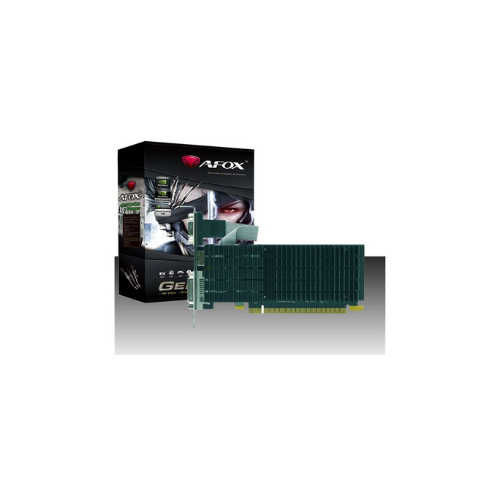

Afox Nvidia Geforce GT710 2GB GDDR3 Graphics Card- (PCI-E2.0, DDR3, VGA/DVI/HDMI) Graphic Cards – AF710-2048D3L7-V8
Key Features
Brand:Afox
2GB DDR3 dedicated memory
Low-profile silent design
HDMI, DVI, VGA outputs
Low power consumption (bus-powered)
Multi-monitor support
FAST DELIVERY
1 Year Warranty
Ultimate Review of Afox Nvidia GeForce GT710 2GB GDDR3 Graphics Card
The Afox Nvidia GeForce GT710 2GB GDDR3 (AF710-2048D3L7-V8) stands as a premier low-profile dedicated graphics card engineered to revitalize legacy desktop computers and expand video display capabilities. This high-efficiency expansion board is designed specifically for budget-conscious home theater setups, multi-monitor productivity workstations, and small-form-factor office towers. It delivers stable video acceleration and multi-port flexibility without demanding expensive power supply unit upgrades.
Key Hardware Specifications
This low-profile graphics card combines an efficient processing core with universal display connectivity interfaces.
- Graphics Engine: Nvidia GeForce GT 710 operating with 192 CUDA cores.
- Video Memory: 2 GB of dedicated GDDR3 VRAM to handle baseline display framebuffers.
- Memory Interface: 64-bit bus width providing efficient data routing pathways.
- Bus Standard: PCI Express 2.0 interface supporting broad backwards compatibility.
- Core Clock Speed: 954 MHz engine clock for steady multimedia rendering performance.
- Memory Clock Speed: 1000 MHz operational speed for standard display synchronization.
- Display Output Interfaces: 1 x HDMI, 1 x DVI-D, and 1 x traditional analog VGA terminal.
- Form Factor: Low-profile design making it compatible with slim workspace chassis.
Multi-Monitor Productivity and Video Acceleration
The core hardware advantage of the Afox GT710 is its integrated multi-port controller, which expands your digital desktop canvas.
Integrated motherboard graphics processors often restrict computing setups to a single monitor and consume valuable system RAM. Installing this dedicated card frees up your main system memory while enabling support for up to three independent displays simultaneously. This triple-port matrix allows professionals to manage data logs, communication windows, and office applications across separate monitors to streamline workflow multitasking.
The hardware engine includes dedicated H.264 video decoding architecture. This processing offload ensures that high-definition 1080p and 4K media playback runs smoothly without stressing your computer central processing unit, keeping system resource boundaries free for secondary computational tasks.
Ideal Deployment Use Cases
Small Form Factor Office Desktops
The slim design and low-profile bracket compatibility allow the card to slide effortlessly into compact business workstations and micro towers.
Home Theater Media PCs
The silent cooling architecture and native HDMI port make it an exceptional bridge for routing high-definition audio and video straight to living room televisions.
Legacy Hardware Diagnostics
Its wide compatibility range makes it an invaluable diagnostic tool for system builders needing a reliable display signal on older PCI Express motherboards.
Thermal Management and Ultra-Low Power Consumption
Energy efficiency and silent thermal performance are integrated directly into the physical layout of the expansion card.
The unit functions on an incredibly small power budget, pulling a maximum graphics card power (TGP) of only 19 Watts. This ultra-low power footprint means the device runs entirely on the electricity supplied natively through the motherboard’s PCI Express slot. It eliminates the requirement for auxiliary six-pin or eight-pin power connectors, making it fully compatible with entry-level 300-Watt proprietary corporate power supplies.
Thermal dispersion is managed by a durable, low-profile active cooling fan or a dense aluminum passive heatsink array. This efficient thermal layer safely dissipates processing heat away from the silicon core while preserving a quiet workspace environment, ensuring long-term hardware life in densely packed server cabinets or small entertainment centers.
Universal Driver Support and Software Integration
The graphics card eliminates software provisioning friction through comprehensive driver alignment across major operating systems.
The underlying Nvidia architecture features full hardware acceleration support for Microsoft DirectX 12 API levels alongside OpenGL 4.5 rendering pipelines. This optimization ensures steady baseline performance across administrative office apps, casual web-browser games, and retail point-of-sale applications.
The driver package installs seamlessly across a versatile operating system landscape, including full compatibility support for Windows 7, Windows 10, and Windows 11 frameworks, as well as native deployment capabilities within standard Linux distributions right out of the box.






























Reviews
There are no reviews yet.