
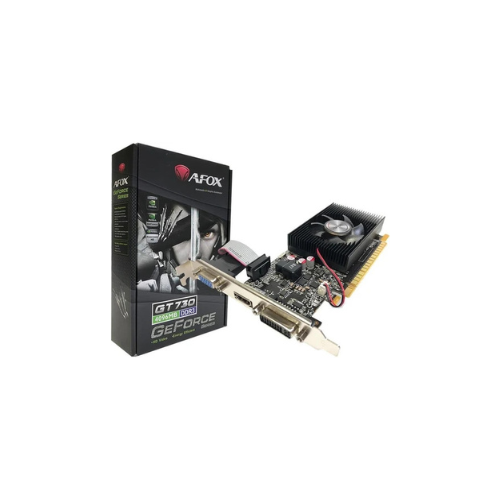
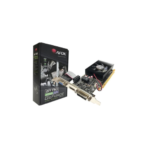
Afox Nvidia Geforce GT730 4GB DDR3 Graphics Card- (PCI-E 2.0, DDR3, VGA/DVI/HDMI) Graphic Cards – AF730-4096D3L7-V8
Key Features
Brand:Afox
PCI Express 2.0 interface
Ports: 1 x DVI, 1 x HDMI
Chipset: NVIDIA
DVI Max Resolution: 2560 x 1600
GPU Processor: GeForce GT730
FAST DELIVERY
1 Year Warranty
Ultimate Review of Afox Nvidia GeForce GT730 4GB DDR3 Graphics Card
The Afox Nvidia GeForce GT730 4GB DDR3 (AF730-4096D3L7-V8) stands as a premier low-profile dedicated graphics expansion card designed to boost visual performance and multi-display capabilities in compact desktop systems. This hardware asset expands your system graphical memory capacity without requiring a massive power supply overhaul. It serves as an exceptional upgrade path for budget-conscious home theater systems, multi-monitor productivity desks, and small-form-factor office towers.
Key Hardware Specifications
This dedicated graphics card balances an expanded frame buffer with universal legacy and modern display outputs.
- Graphics Engine: Nvidia GeForce GT 730 operating with stable Fermi or Kepler architecture pipelines.
- Video Memory: 4 GB of dedicated DDR3 VRAM to handle large display frame buffers and high-resolution textures.
- Memory Interface: 64-bit bus width providing dedicated data routing pathways.
- Bus Standard: PCI Express 2.0 interface supporting broad backwards compatibility with older motherboards.
- Engine Clock Speed: 700 MHz core clock for steady multimedia and display rendering performance.
- Memory Clock Speed: 1333 MHz operational speed for consistent multi-window rendering.
- Display Output Interfaces: 1 x HDMI, 1 x Dual-Link DVI-I, and 1 x traditional analog VGA terminal.
- Form Factor: Low-profile layout making it compatible with slim desktop chassis formats.
Expanded 4GB VRAM and Multi-Monitor Real Estate
The defining hardware milestone of this specific Afox model is the integration of an expanded 4 GB video memory buffer.
While typical entry-level cards carry smaller 1 GB or 2 GB limits, the 4 GB memory pool allows the graphics card to store larger amounts of visual data directly on the card. This prevents the system from offloading graphics processing onto your slower main desktop RAM, preserving overall computer system speed. This large frame buffer easily drives up to three independent monitors simultaneously using the built-in HDMI, DVI, and VGA ports.
Professionals can spread multiple workspace documents, messaging apps, and monitoring dashboards across separate displays, completely eliminating the productivity friction of constantly swapping between minimized application tabs.
Ideal Deployment Use Case Scenarios
Small Form Factor Workspace Towers
The slim physical profile allows the graphics card to slide effortlessly into space-constrained corporate micro towers and slim media stations.
Home Theater Media Hubs
The native high-definition HDMI port carries both digital video and multi-channel audio signals over a single cable directly to living room displays.
Office Productivity and Administrative Stations
It handles entry-level graphical workloads, web browser hardware acceleration, and video conferencing playback smoothly, freeing up internal CPU resources.
Low Power Demands and Thermal Efficiency
Energy efficiency and silent operational acoustics are engineered directly into the layout of this graphics hardware.
The device operates on a tiny power profile, pulling a maximum graphics card power of under 40 Watts. This ultra-low electrical demand means the card draws all its necessary operating power straight from the motherboard’s PCI Express slot. It completely removes the need for specialized 6-pin or 8-pin external power supply cables, ensuring full out-of-the-box compatibility with small, proprietary 250-Watt or 300-Watt corporate computer power bricks.
Thermal dissipation is managed by a durable, low-profile cooling fan sitting on top of an aluminum heatsink. This active configuration safely draws heat away from the core processing chip while keeping operational noise to an absolute minimum, protecting the internal hardware architecture during extended multi-hour work shifts.
Driver Initialization and API Architecture
The underlying architecture provides reliable background stability through verified driver integration across major computing platforms.
The system features native hardware acceleration support for Microsoft DirectX 12 (feature level 11_0) alongside OpenGL 4.4 rendering protocols. This foundation guarantees seamless visual execution for modern office suites, web-based database platforms, and casual video content streaming.
The software drivers install rapidly without technical bottlenecks, offering full compatibility with older Windows installations, current Windows 10 and Windows 11 frameworks, as well as native out-of-the-box deployment capabilities inside standard Linux operating systems.
If you are mapping out a small-form-factor desktop hardware upgrade, let me know if you want info on low-profile bracket conversions, monitor port adapters, or specific resolution support capabilities.






























Reviews
There are no reviews yet.